
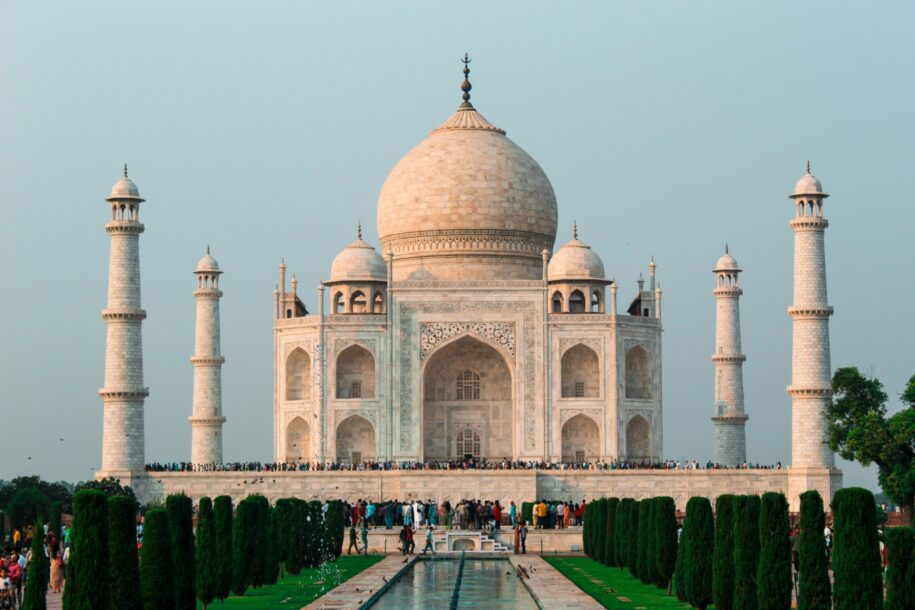
India, with its diverse culture, rich history, and beautiful nature, is a destination that attracts travelers from all over the world. This vast country, stretching from the snow-covered peaks of the Himalayas in the north to sunny Kerala in the south, offers an endless number of experiences. Whether you are interested in architecture, history, nature, or spirituality, India has something to offer everyone.
Traveling to India is relatively safe, but for someone visiting for the first time, many unexpected situations can arise. The aim of this guide is to prepare you for your trip to India so that you can feel informed and confident.
1. Trip Planning
When to go?
India has a diverse climate, so it is important to plan your trip according to the weather. In India, four seasons are usually distinguished:
Winter (December to early April): This period is ideal for visiting most parts of the country, including popular tourist destinations such as Rajasthan, Kerala, and Goa. The weather is pleasant, with cool evenings and warm days. However, be aware that nights can be very cold, and in these popular destinations temperatures at night can drop below 10 degrees, so warm clothing is recommended. Ordinary tourists are not advised to travel to Himalayan areas such as Himachal Pradesh, Jammu and Kashmir, and Ladakh.
Summer (April to June): The summer months are very hot, especially in the northern and central parts of India. In cities such as Delhi, Agra, and Jodhpur, temperatures can rise to 40 degrees. However, if you are planning to visit the Himalayas or northeastern India, summer is the best time.
Monsoon (late June to September): The monsoon season brings a lot of rain to India, which can affect travel. I do not recommend traveling to the central and southern parts of India during this period, as it can rain for days and traveling in such conditions is very impractical. In mountainous areas, dangerous landslides can also occur. If you are willing to risk occasional rain, you can visit the Golden Triangle and Rajasthan during this period. These areas generally receive less rainfall, and you can enjoy less crowded sights and lower prices.
Post-monsoon (October to December): This is an ideal period for travel in India. It brings the end of the rains and sunny days, with temperatures up to 30 degrees. Tourist areas, however, can be crowded.

[Monsoon season in Udaipur]
Routes and destinations
India is a huge country, so it is important to plan your route carefully in order to make the best use of your time. Here are some of the most popular tourist routes:
Golden Triangle: This route includes Delhi, Agra (the Taj Mahal), and Jaipur. It is the ideal choice for those who want to see historical and cultural landmarks.
South India: This region is known for its beautiful beaches, temples, and peaceful atmosphere. Tourist places in South India are less crowded. Recommended destinations include Kerala (Alleppey, Munnar), Tamil Nadu, and Karnataka (Hampi).
North India: Ideal for lovers of mountains and spirituality. It includes places such as Uttarakhand (Rishikesh), Himachal Pradesh (Dharamshala), and Ladakh.
Eastern and Northeastern India: Less well known, but equally fascinating destinations such as Darjeeling and the states of Assam and Sikkim.
If you need help planning your trip, feel free to contact us. We will be happy to plan your journey through India according to your needs, fully tailored to you.

[Palace of Winds – Hawa Mahal in Jaipur]
Travel Insurance
Travel insurance is essential for every traveler. In India, healthcare can be expensive, especially for foreign tourists. When choosing travel insurance, you should consider:
Medical coverage: Make sure your insurance covers hospitalization, medical treatment, and transport back to your home country in case of emergency.
Loss and theft: The insurance should include coverage in case of loss or theft of luggage and personal belongings.
Cancellation fees: If you have to cancel your trip for any reason, it is good to have insurance that covers cancellation fees for flights and accommodation.
2. Visas and Documents
Types of visa
When planning a trip to India, it is necessary to arrange a visa. India offers several types of visas depending on the purpose of your visit. You can find all visa types on the official website.
For tourists, the most popular option is the e-visa, which can be applied for conveniently from home by filling out the form at: https://indianvisaonline.gov.in/. For visa processing, I recommend using only this website.
E-visas can be applied for according to your preference for:
- 30 days (fee 25 USD)
- 1 year (fee 40 USD)
- 5 years (fee 80 USD)
Application process for the visa
The visa application process for India is fairly simple, but time-consuming:
Visit the official website: https://indianvisaonline.gov.in/
After clicking through, you will reach the visa form, which has multiple pages. After filling it in, you will need to upload a passport-style photo with a white background in JPEG format, sized from 10 KB to 1 MB, and a passport scan (valid for at least 6 months from the date of entry into India) in PDF format, sized 10 KB to 300 KB. The last step is payment. Make note of your application ID so that you can access information about the status of your application.
There are a few unclear items in the visa form:
- Identification mark: you can enter none, or for example a visible mark (mole on left cheek).
- Religion: I recommend stating Christianity.
- Reference in India: use the name, phone number, and address of one of your hotels.
- Fields cannot be left blank. If a field is irrelevant to you, write NA (not available).
Other important documents
Besides the visa, here is a list of other documents you should have prepared before traveling to India:
- Passport: Make sure your passport is valid for at least 6 months from the date of entry into India and contains enough blank pages for visas and entry stamps.
- International driving permit: If you plan to drive in India, you need an international driving permit under the Geneva Convention. I do not recommend driving in India. A less risky option is riding a scooter in some areas, for example Goa or smaller towns. However, you should realistically assess your abilities, as traffic is truly chaotic and follows few rules.
- Travel insurance: Print a copy of your travel insurance and keep it with you in case of emergency
3. Health and Safety
Health
Recommended vaccinations include hepatitis A and B, yellow fever, and typhoid. These vaccinations are not mandatory, but they are recommended especially for travelers who will spend more than one month in India and move through higher-risk areas. Do not forget to bring a basic first-aid kit with medicines for common problems such as digestive issues or headaches. All medicines are readily available in India, and pharmacies are almost everywhere.
Caution
Be careful and pay attention to your surroundings, especially in crowded places and tourist areas. India is relatively safe for tourists, but minor pickpocketing can occur. Keep your passport, credit cards, and money in a secure place. I recommend a neck wallet that you can hide under your shirt (for example, a discreet neck pouch from Decathlon).
Scams
Scams against tourists are common in India. When shopping, check whether the price is too high and always start bargaining at least 50 percent lower. In tourist destinations, nothing is free. If someone offers you something for free, politely refuse.
Beggars
There are many begging adults and children on the streets. I do not recommend giving them money or food, as it is often part of organized groups exploiting these people for profit.
4. Cultural customs and respect for local traditions
When visiting religious sites and monuments, it is necessary to cover your head, shoulders, and legs. Remove your shoes before entering temples. I recommend light clothing that covers the legs and shoulders, and easy slip-on footwear such as flip-flops, sandals, or slip-ons. For women, I recommend carrying a scarf.
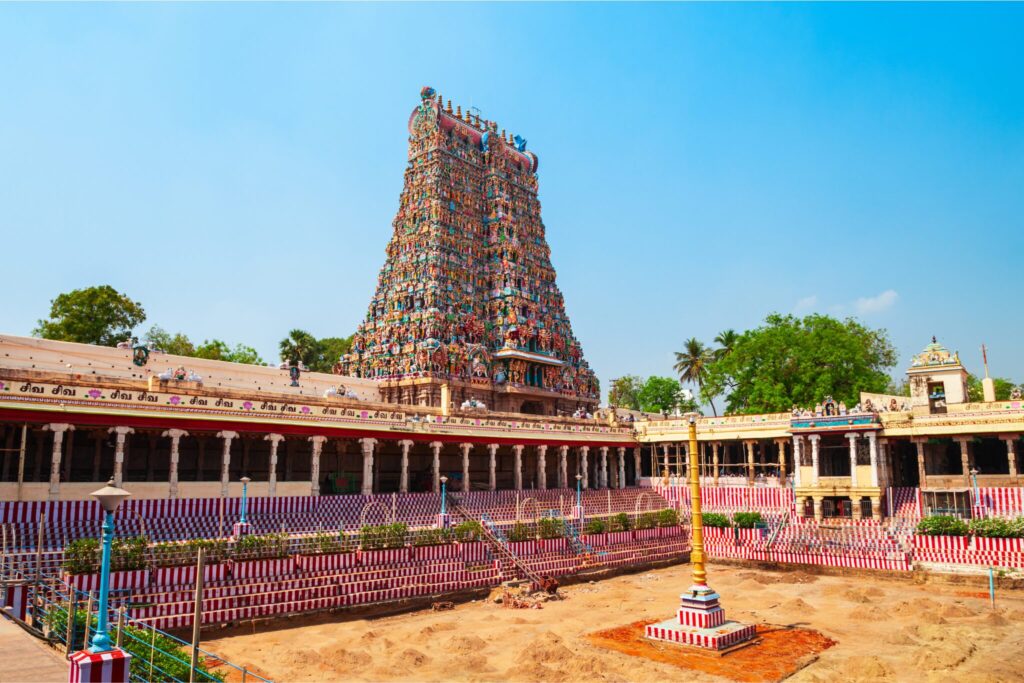
[Meenakshi Amman Temple in Madurai]
6. Transportation
How to get to India
India is well connected to most countries in the world by air. Here are some of the main ways to get to India from Vienna:
International flights: Most visitors arrive in India via international airports. The busiest airports are:
Indira Gandhi International Airport (DEL) in Delhi
Chhatrapati Shivaji Maharaj International Airport (BOM) in Mumbai
Kempegowda International Airport (BLR) in Bengaluru
Direct flights: Air India offers direct Europe–Delhi flights, so you can comfortably reach India in about 7 hours.
Connecting flights: Many airlines offer attractive fares to India, often with stopovers. These include Etihad (via Abu Dhabi), Qatar Airways (via Doha), IndiGo (in cooperation with Turkish Airlines, via Istanbul), Lufthansa (via Munich), LOT (via Warsaw), and Swiss Airlines (via Zurich). So the trip to India can be combined with a stop in one of these cities. Etihad currently offers a stay in Abu Dhabi for up to 2 nights in a 3-star hotel for free, and discounts on 4- and 5-star hotels.
 [Sunset during the Mumbai–Goa flight]
Transportation in India
After arriving in India, you have several transport options depending on distance, comfort, and budget.
Trains: Indian Railways is one of the largest railway networks in the world. Trains are affordable and offer different comfort classes, from basic seats to comfortable sleeper coaches. I recommend traveling by train, even for longer distances. Train availability and class options can be checked on the Indian Railways site (IRCTC): https://www.irctc.co.in/nget/train-search. However, to buy tickets you need an Indian phone number, and international payment cards are not accepted. You can use 12Go Asia instead: https://12go.asia/en. Ticket options there are limited and do not include all trains and classes.
Vande Bharat trains are India’s flagship trains. I recommend you to choose this option for comfortable, modern and clean trains.
There are as well other good trains, such as Rajdhani Express, Shatabdi Express and Duronto Express.
Buses: Bus transport is another affordable option for traveling around India. Both state-run and private buses cover most of the country. Private buses often offer a higher level of comfort. I therefore recommend buying tickets directly in India, on sites such as Goibibo or Make My Trip. You can also buy tickets in person at travel agencies, which are plentiful in tourist destinations. Always check reviews before choosing an agency.
Taxis and rickshaws: For shorter distances or city transport, you can use taxis or auto-rickshaws. Apps like Uber and Ola are popular in larger cities and can be a reliable option. Even so, the driver may still ask for more money; this is not your obligation, and you should stand by the previously agreed price. If you are not using an app, always agree on the price in advance.
Motorcycles and scooters: Renting a motorcycle or scooter is a popular option, especially in tourist areas like Goa or the Himalayas. Always make sure you have a valid international driving permit under the Geneva Convention and wear a helmet. You can also use moto-taxi services such as the Rapido app at very reasonable prices (rides from 20 rupees).
Metro and local transport: Large cities such as Delhi, Mumbai, Bengaluru, and Kolkata have developed metro or local train and bus systems that are efficient and affordable.
Car rental: There are many international and local companies offering car rentals. However, I will repeat that driving for a beginner in India is very dangerous, and I strongly recommend only renting a vehicle with a driver.
Car with driver: Renting a car with a driver is common practice in India. It can be a comfortable and safe choice. Prices are reasonable.
If you want to book a train, bus, or car with a driver and avoid scams, feel free to contact us. We will be happy to arrange your transport exactly according to your wishes.
 [Traffic in New Delhi]
7. Accommodation
India offers a wide range of accommodation options to suit different budgets and traveler preferences. Whether you are looking for luxury hotels or affordable hostels, you will find everything here.
Types of accommodation
Hotels: India has many hotels of different categories, from luxury five-star resorts to affordable mid-range hotels. Luxury hotels such as Taj, Oberoi, and Leela offer excellent service and top-class facilities. For smaller budgets, there are hotels that provide comfortable and clean accommodation at reasonable prices.
Hostels: Hostels are an ideal choice for young travelers and those traveling on a limited budget. Popular hostel chains such as Zostel, Moustache, and Hosteller are common. They offer clean and comfortable shared as well as private rooms, often with the advantage of modern common areas where you can spend time and meet other travelers.
Airbnb: Airbnb is a popular platform for renting private apartments and houses. It is a great option if you want more privacy or are planning a longer stay. Airbnb offers everything from simple apartments to luxury villas.
Ashrams: For those seeking spiritual and meditation retreats, ashrams are available. Places like Rishikesh and Varanasi are known for their ashrams, which offer simple accommodation combined with yoga and meditation.
 [Five-star hotel Chunda Palace Udaipur]
How to find and book accommodation
Here are some steps to find and book the ideal accommodation:
Online platforms: Use platforms such as Booking.com, Agoda, Airbnb, and Hostelworld to search for and book accommodation. If you are already in India, you can also try goibibo.com and makemytrip.com. These local platforms often offer better prices.
Reading reviews: Before booking, always read reviews from previous guests. Reviews give you an idea of service quality, cleanliness, and location. Pay attention to reviews from foreign travelers, as Indian reviews may sometimes be fake.
Book in advance: If you plan to travel during peak tourist season or during major holidays and festivals, book your accommodation in advance to avoid availability problems and high prices.
Direct booking: Sometimes it is more advantageous to book accommodation directly on site. This can help you negotiate better prices, especially in tourist destinations where there are many accommodation options.
8. Drinking and food
Water
It is recommended to drink only bottled water to minimize the risk of stomach illness. Use bottled water even when brushing your teeth, and rinse your mouth with drinking water after showering.
Local food
Try local dishes, but avoid food that is too spicy if you are not used to hot flavors. Restaurants are usually happy to prepare less spicy dishes for foreigners. Eat only in restaurants where you can see mainly locals eating, and also check current reviews, for example on Google Maps. Outside the rainy season, you can also try street food. Choose a stall where there are people and where the food is being freshly prepared. Safe signs when choosing street food are satisfied locals eating there and a good smell. If anything about the food seems off, it is better not to eat it.
 [Chicken thali on Arambol Beach]
8. Communication and electronics
Communication
English, as one of the official languages, is widely spoken, especially in tourist destinations. Not everyone speaks it, however, so it may be useful to learn a few basic phrases in Hindi.
Electronics and power
Adapters: Electrical sockets in India have a different shape than in Europe, but our adapters usually fit without any problem. The electrical system uses 230 V.
Power supply: Most hotels have stable electricity, but in some areas there can be outages, so an external power bank for your electronics may be useful.
Conclusion
India is a country full of contrasts, where ancient traditions meet the modern world. It is a place that offers endless opportunities to explore, learn, and experience something new.
To conclude, I would only say that India can be a major culture shock for some travelers. Be open to new experiences and try to adapt. This is the best way to get as close as possible to understanding a different culture.
If you have any questions or need more local advice for your trip, browse our services and feel free to contact us. We wish you an amazing and unforgettable journey through India.
Leave a Reply